You can configure Microsoft 365 with an MFA-enabled account for notification settings. This can be used to send email notifications about backup job results.
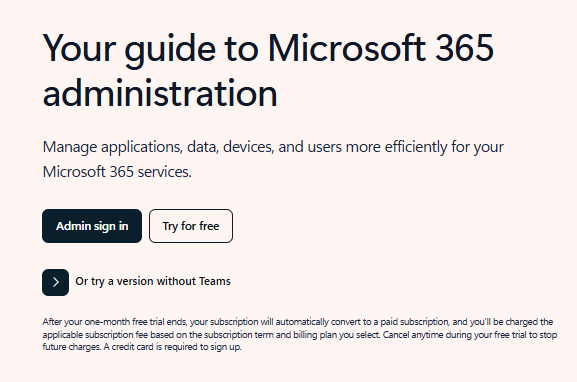
1. Sign in Microsoft 365 administrator portal with a Global Admin account, and click Admin sign in.
https://www.microsoft.com/en/microsoft-365/business/microsoft-365-administration
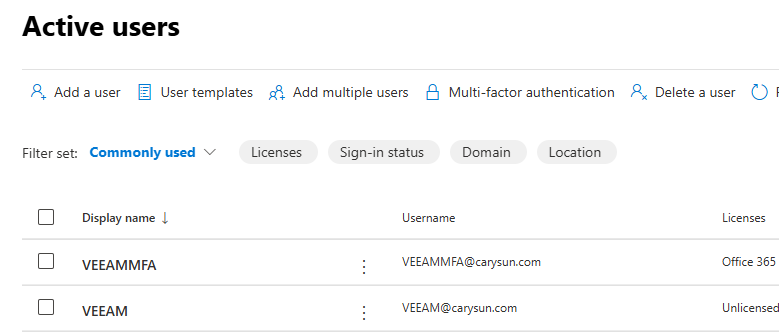
2. Expand Users on the Microsoft 365 admin center and select Active Users.
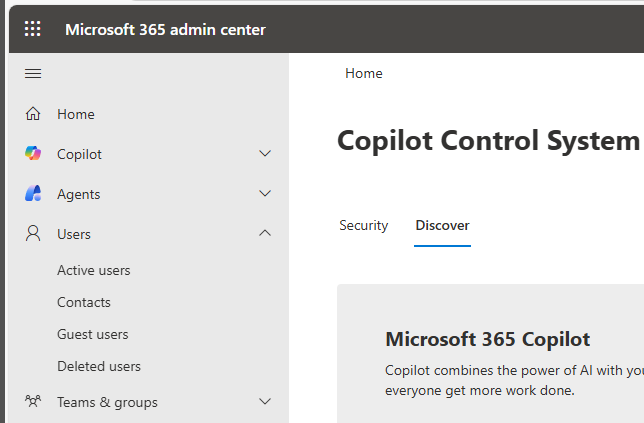
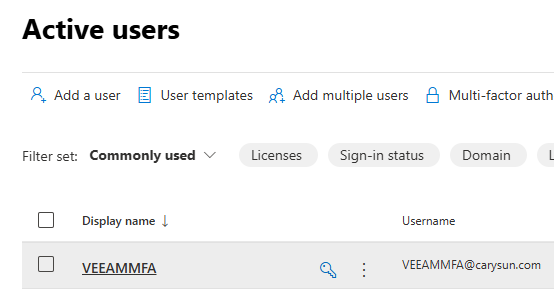
3. On the Active users’ page, click the Veeam service account (in my case VEEAMMFA).
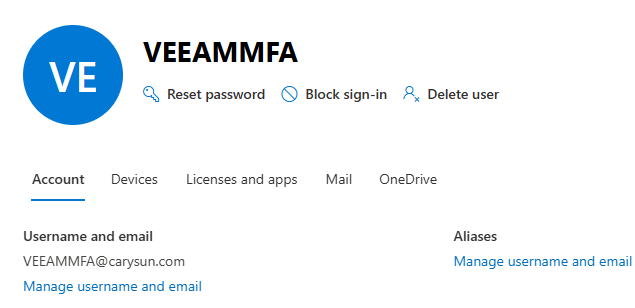
4. On the account page, select License and apps.
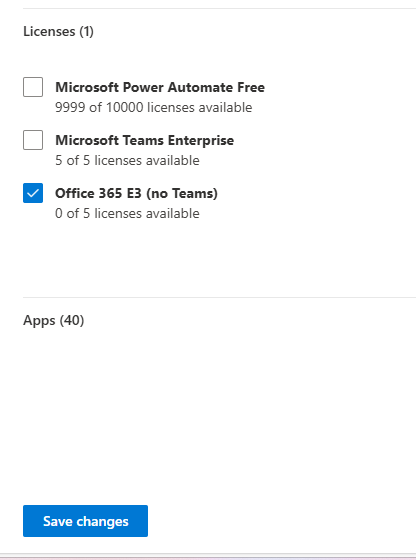
5. On the License and apps page, assign a license for the user and click Save changes.
6. Close the user account settings.
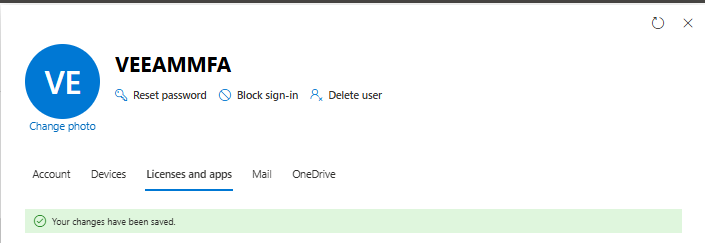
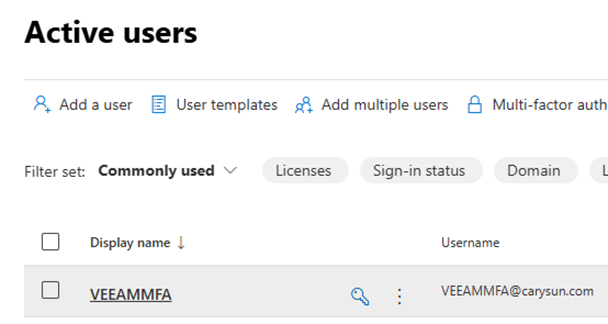
7. On the Active users’ page, click the Veeam service account again (in my case VEEAMMFA).
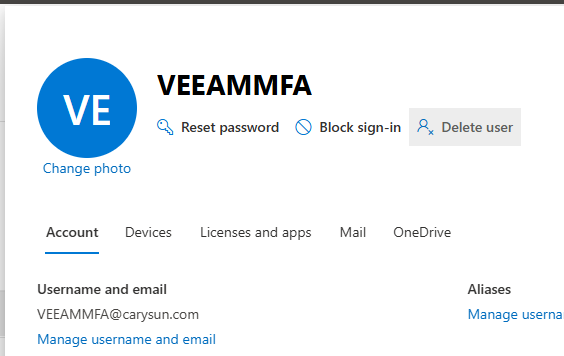
8. On the user account page, select Mail. It would be best if you waited a few minutes to prepare a mailbox for the user.
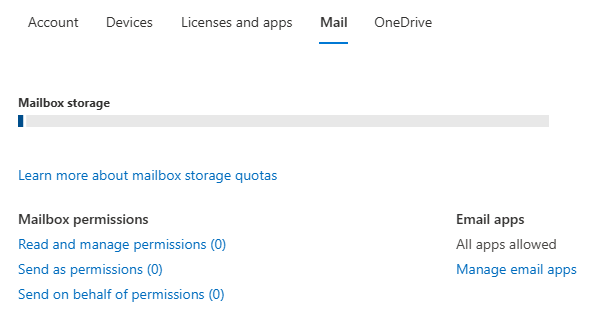
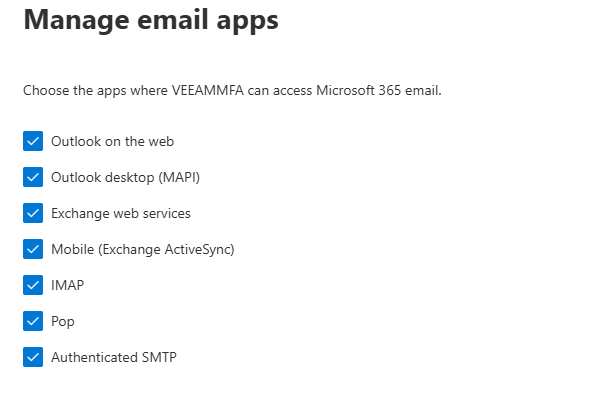
9. On the Mail page, select Manage email apps.
10. On the Manage email apps, select Authenticated SMTP and click Save changes.
11. Close the Manage email apps page.
12. On the Active Users page, select Multi-factor authentication.
13. Sign in with a global admin account.
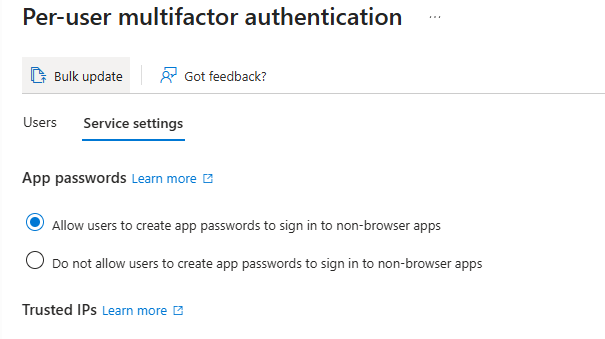
14. On the Per-user multi-factor authentication page, select service settings.

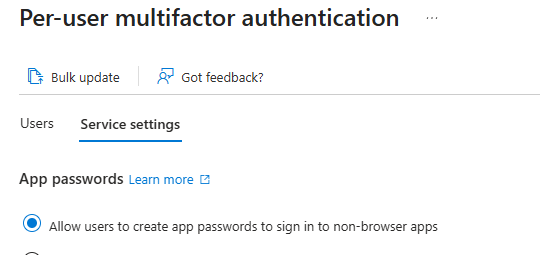
15. Select Allow users to create an app password to sign in to non-browser apps and click Save.
16. On the Per-User multi-factor authentication page, select users.
17. Follow the steps below to ensure the user account enables MFA.
18. On the user’s page, select the Veeam service account.

19. Select Enable MFA.
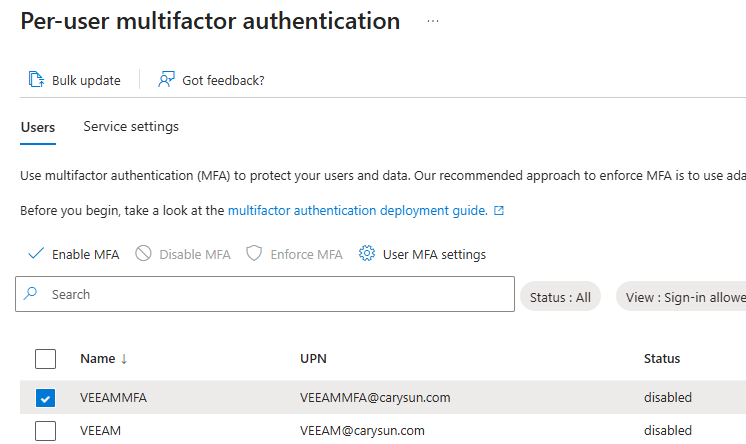
20. Click Enable on the Enabling multi-factor authentication page.

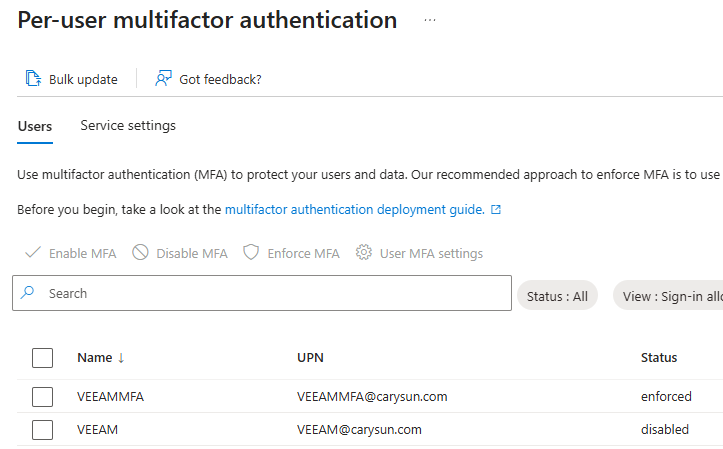
21. Ensure the status of the service account shows enforced.
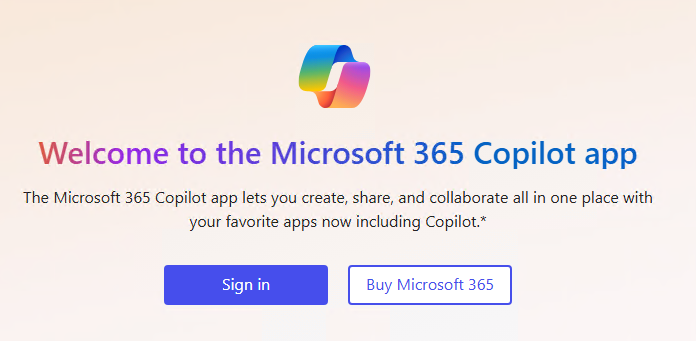
22. Sign in Office 365 portal with a Veeam service account.
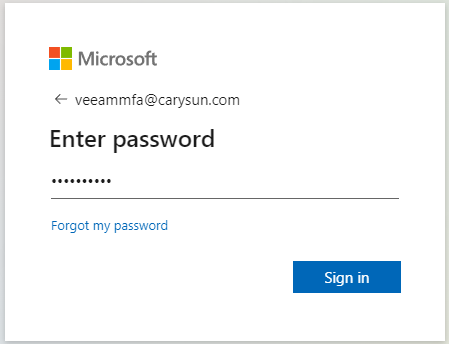
23. Enter the Veeam services account email address on the Sign-in page.
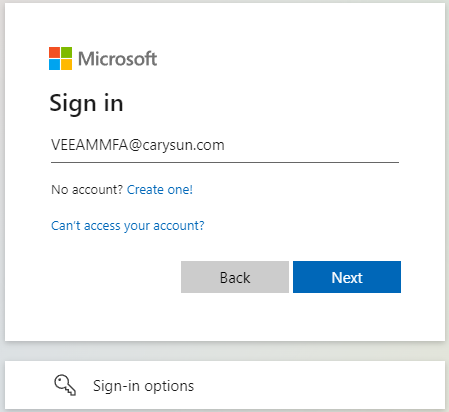
24. Enter password.
25. If the Veeam service account is an existing MFA account, follow the steps below to add App password authentication.
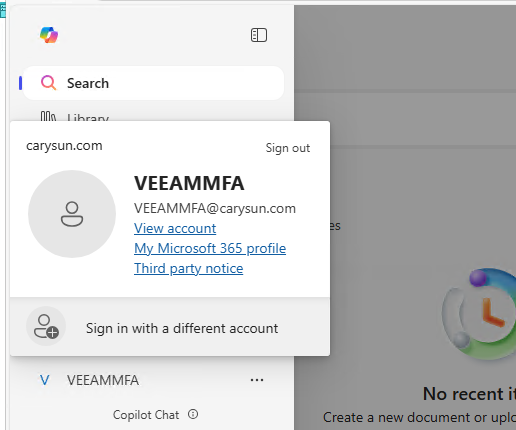
26. Sign in Office 365 portal with the Veeam service account and select View account.
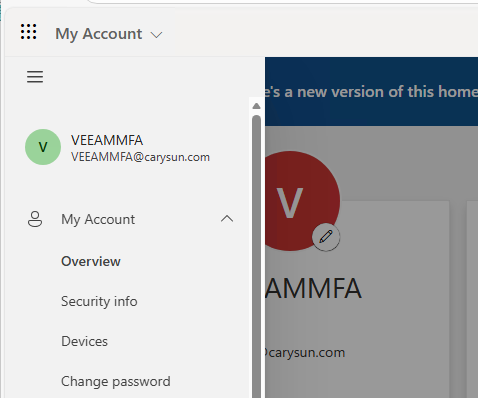
27. On the My Account page, select Security info.
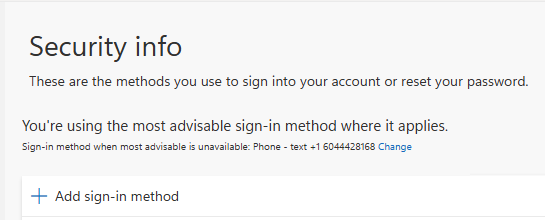
28. On the Security info page, select the +Add sign-in method.
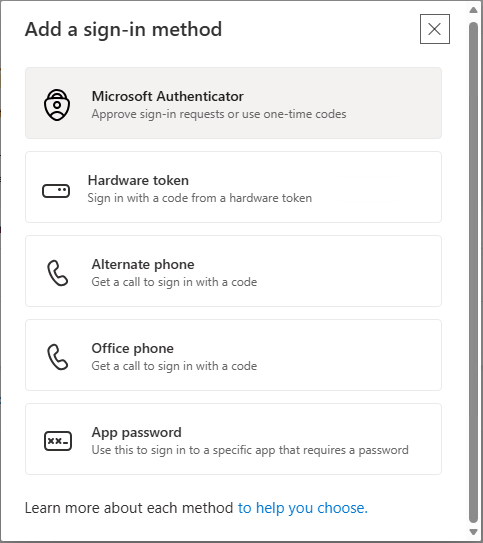
29. On the Add a sign-in Method page, click App password.
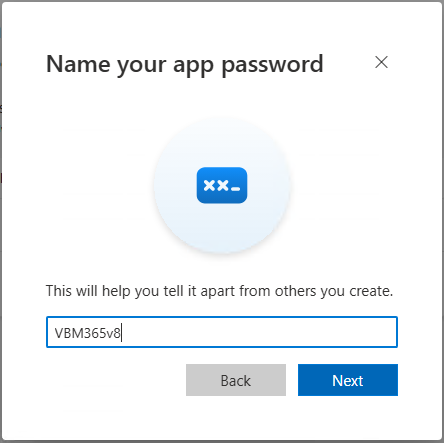
30. On the Name your app password page, enter the name in the App password name field and click Next.
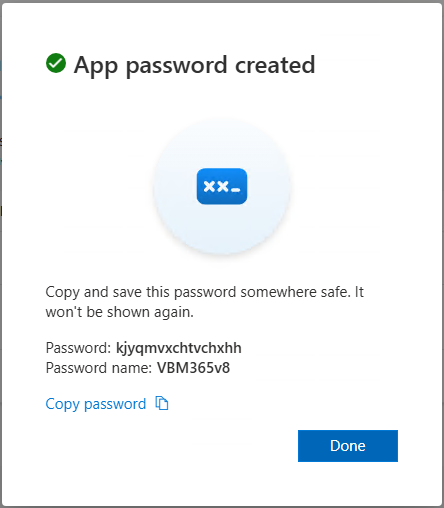
31. Copy and keep the password in a safe place. It will not be shown again. Click Done.
32. Login to the Veeam Backup for Microsoft 365 Manager server.
33. Open the Veeam Backup for Microsoft Office 365 console.
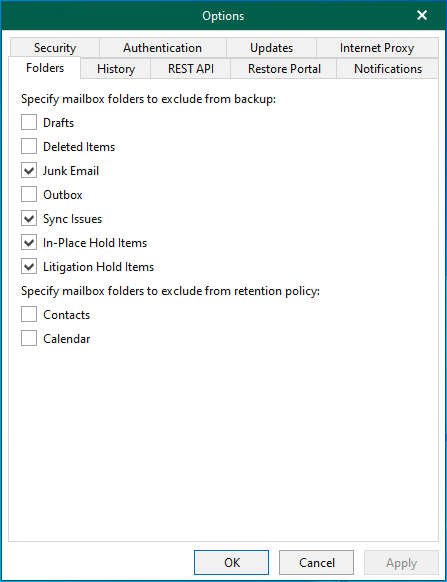
34. On the Veeam Backup for Microsoft 365 console page, in the main menu, click General Options.
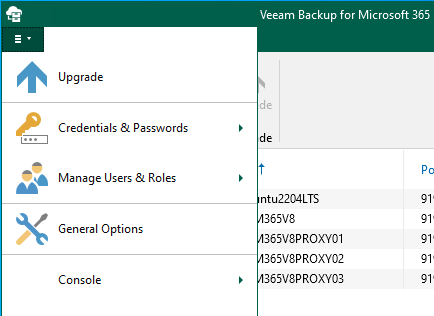
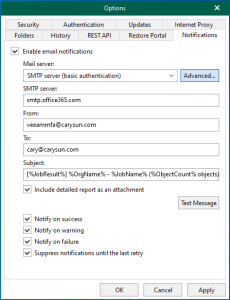
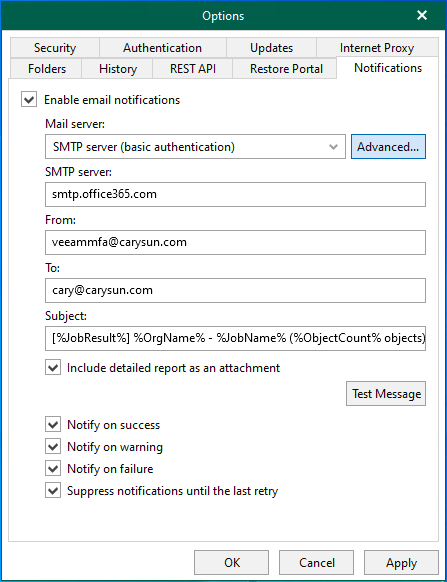
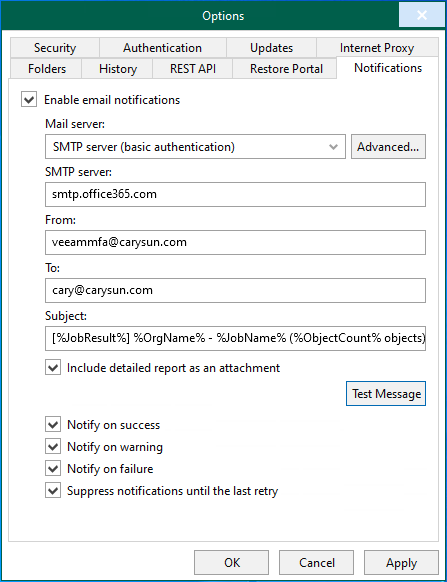
35. On the Options page, select Notifications.
36. On the Notifications page, select Enable email notifications.
37. Select SMTP server (basic authentication) in the Mail server field.
38. Click Advanced.
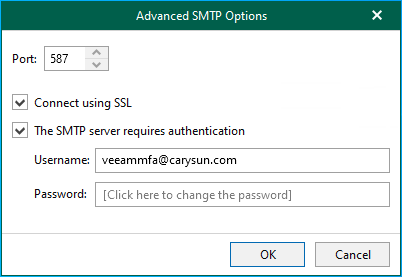
39. On the Advanced SMTP Options page, type 587 in the port field.
40. Select Connect Using SSL.
41. Select The SMTP server requires authentication, type the Microsoft 365 service account (in my case, it is VEEAMMFA@carysun.com) in the Username field, enter the App password in the password field and click OK.
Note:
Enter the APP password not the user account password in the password field.
42. Enter smtp.office365.com in the SMTP server field.
43. Enter VeeamMFA@Carysun.com in the from field.
44. Enter the email address in the notification list in the To field.
45. Click Test Message.
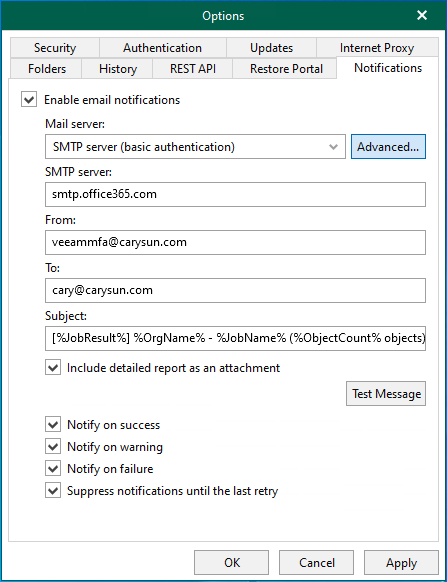
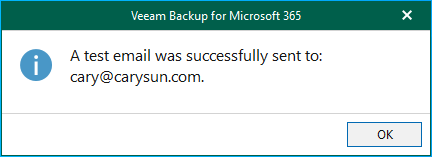
46. Ensure the test email was successfully sent to recipients and click OK.
47.Click OK on the Options page.
I hope you enjoy this post.
Cary Sun
X: @SifuSun
Web Site: carysun.com
Blog Site: checkyourlogs.net
Blog Site: gooddealmart.com
Amazon Author: Amazon.com/author/carysun

Author: Cary Sun
Cary Sun has a wealth of knowledge and expertise in data center and deployment solutions. As a Principal Consultant, he likely works closely with clients to help them design, implement, and manage their data center infrastructure and deployment strategies.
With his background in data center solutions, Cary Sun may have experience in server and storage virtualization, network design and optimization, backup and disaster recovery planning, and security and compliance management. He holds CISCO CERTIFIED INTERNETWORK EXPERT (CCIE No.4531) from 1999. Cary is also a Microsoft Most Valuable Professional (MVP), Microsoft Azure MVP, Veeam Vanguard and Cisco Champion. He is a published author with several titles, including blogs on Checkyourlogs.net, and the author of many books.
Cary is a very active blogger at checkyourlogs.net and is permanently available online for questions from the community. His passion for technology is contagious, improving everyone around him at what they do.
Blog site: https://www.checkyourlogs.net
Web site: https://carysun.com
Blog site: https://gooddealmart.com
Twitter: @SifuSun
in: https://www.linkedin.com/in/sifusun/
Amazon Author: https://Amazon.com/author/carysun